Enterprise Data Platform
Oasis: Modernizing enterprise research data workflows
I led product design across Oasis’s research-data workflows. I established the design system, later took responsibility for design quality, and managed another designer on the project.
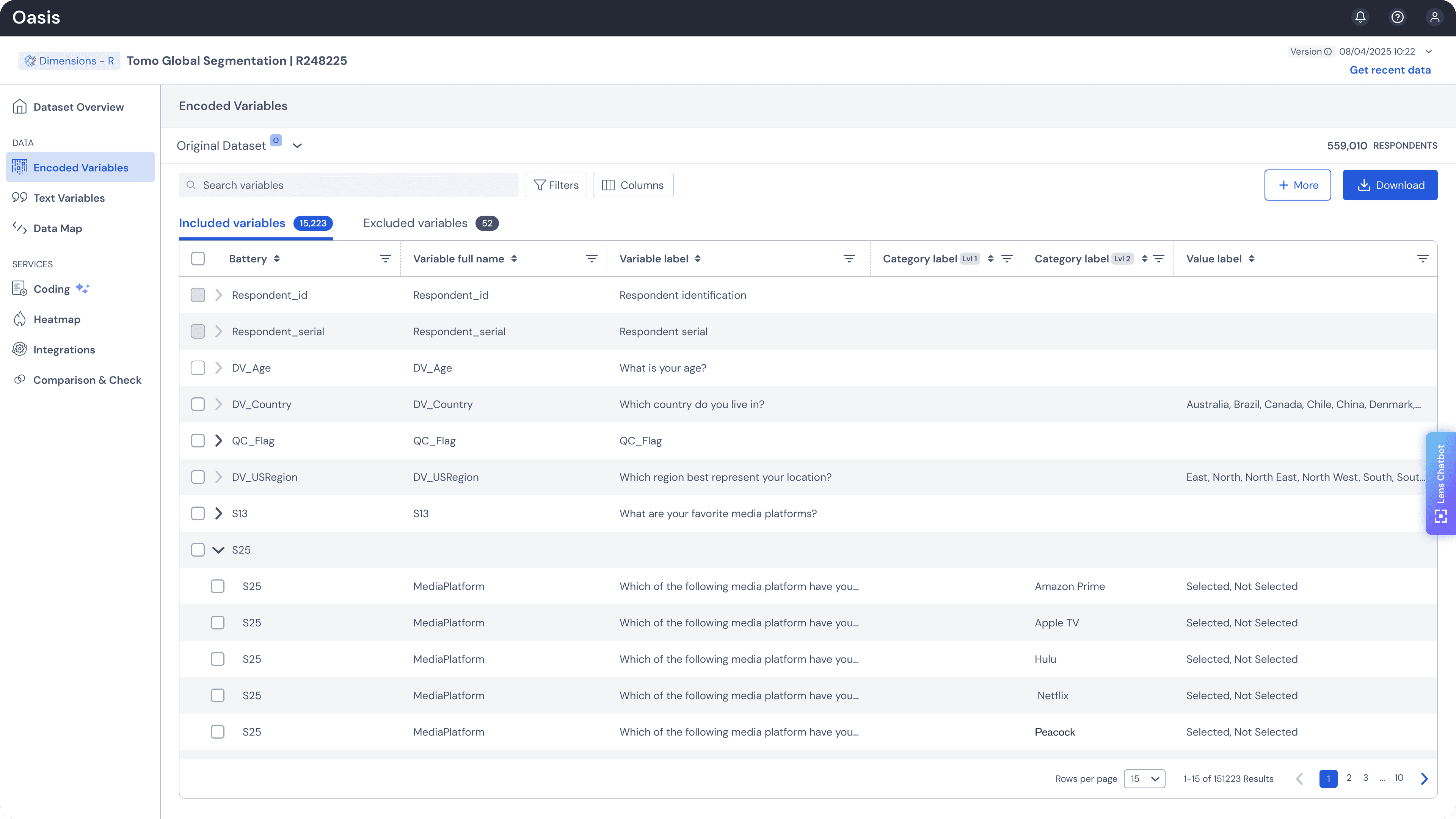
Oasis brought research data work that had lived across separate tools into one shared cloud platform. I joined during early product definition and stayed through multiple production releases, designing the project-data experience and working through complex operational requirements with the team.
The platform had to work alongside existing tools and different team processes. My work focused on improving access to project data, connecting related workflows, and identifying opportunities to reduce repetitive steps where the product supported them. Beyond individual workflows, I established reusable design patterns and translated complex product requirements into implementation-ready designs across multiple releases.
- Role
- Lead Product Designer
- Product
- Enterprise platform
- Scope
- Sole designer initially; design-system direction,
design quality, and management of one designer - Timeline
- 2022-2026
Giving a growing platform a persistent hierarchy
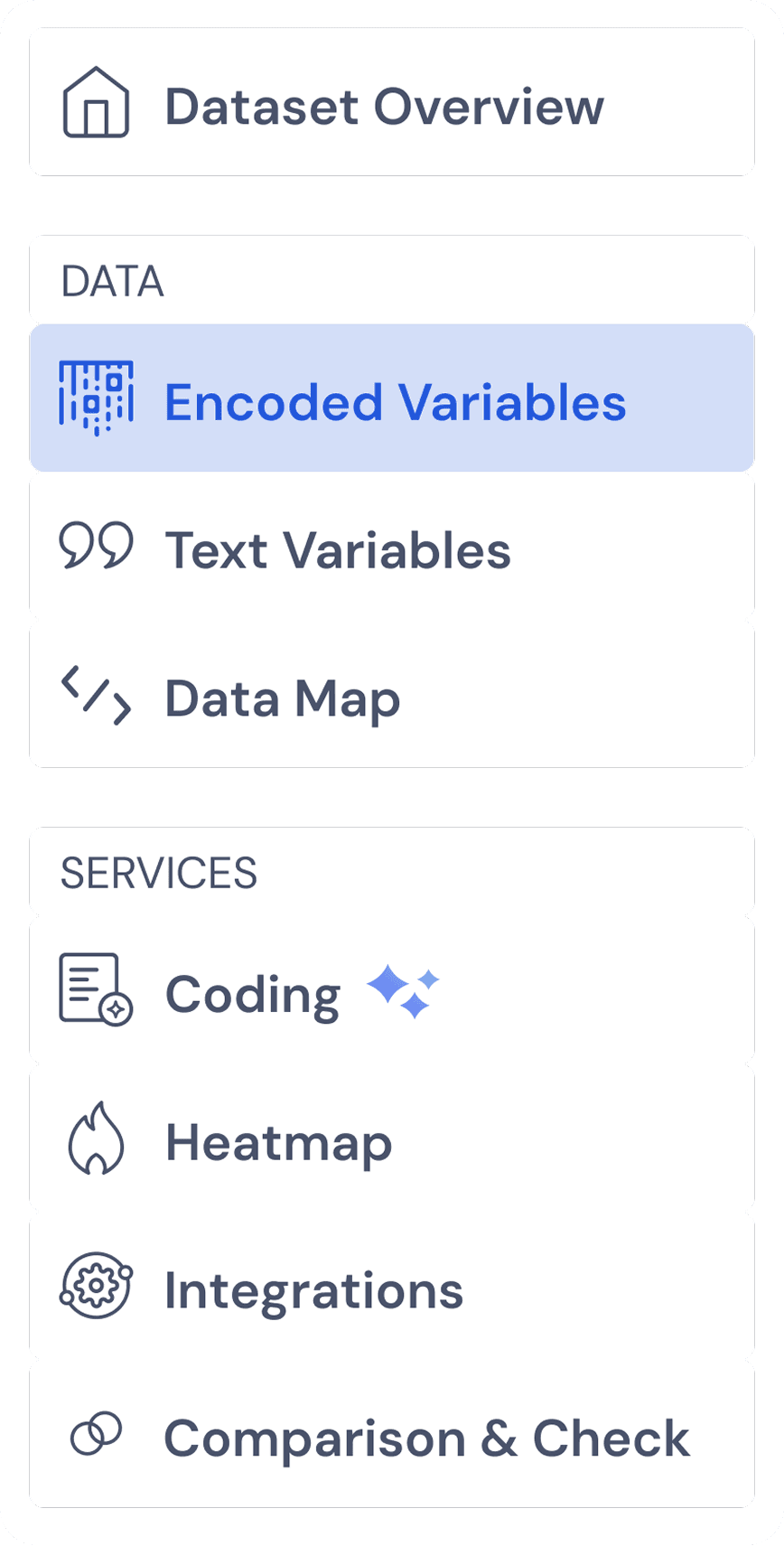
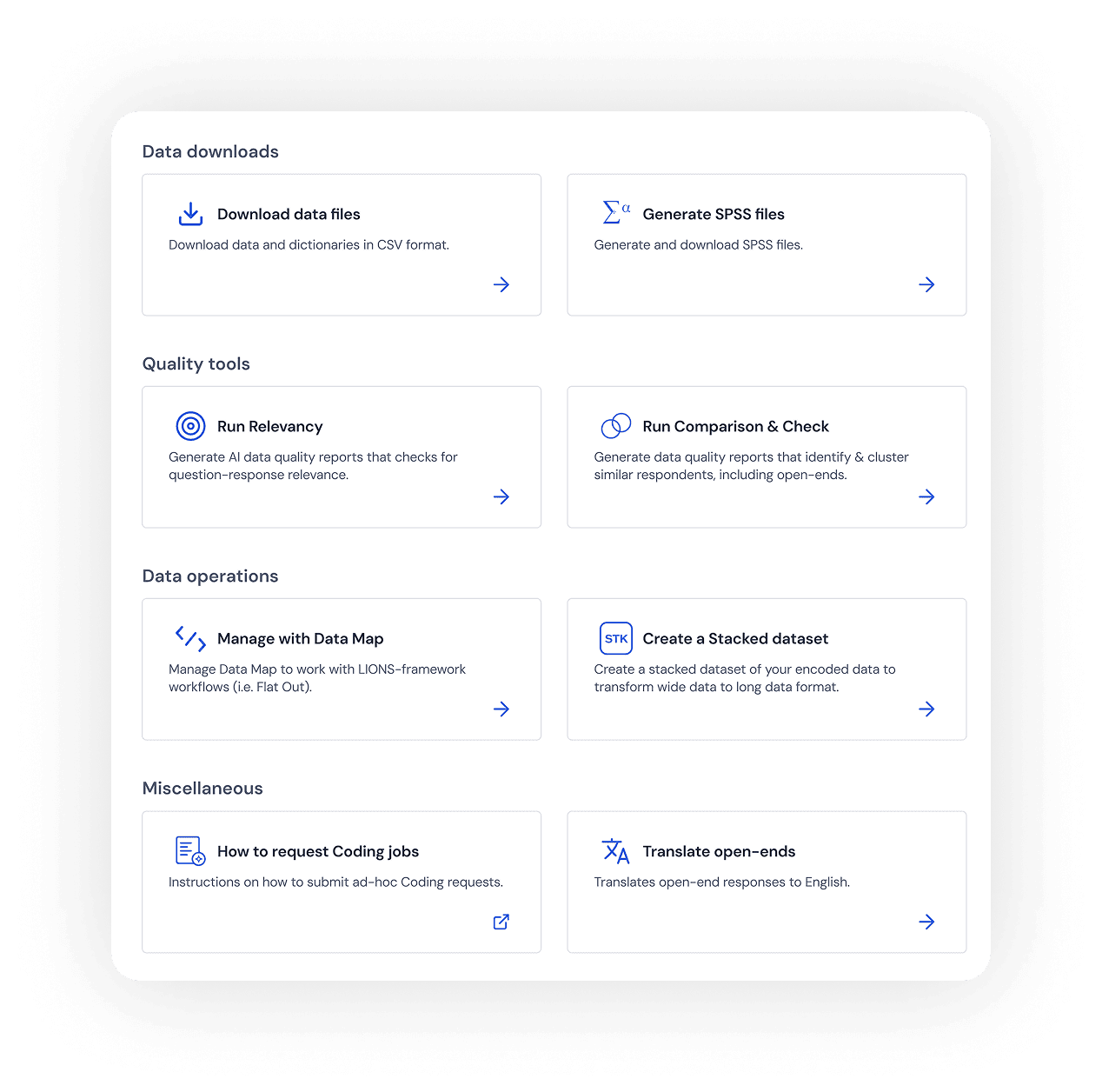
Oasis began with Encoded Data and Text Data as top-level tabs. As capabilities expanded, I explored tabs with a dropdown, grouped navigation, and nested tabs before recommending persistent left navigation. The shipped hierarchy gave data views and services room to grow and prompted Dataset Overview as a starting point for dataset tools.
Making AI choices and the next step visible
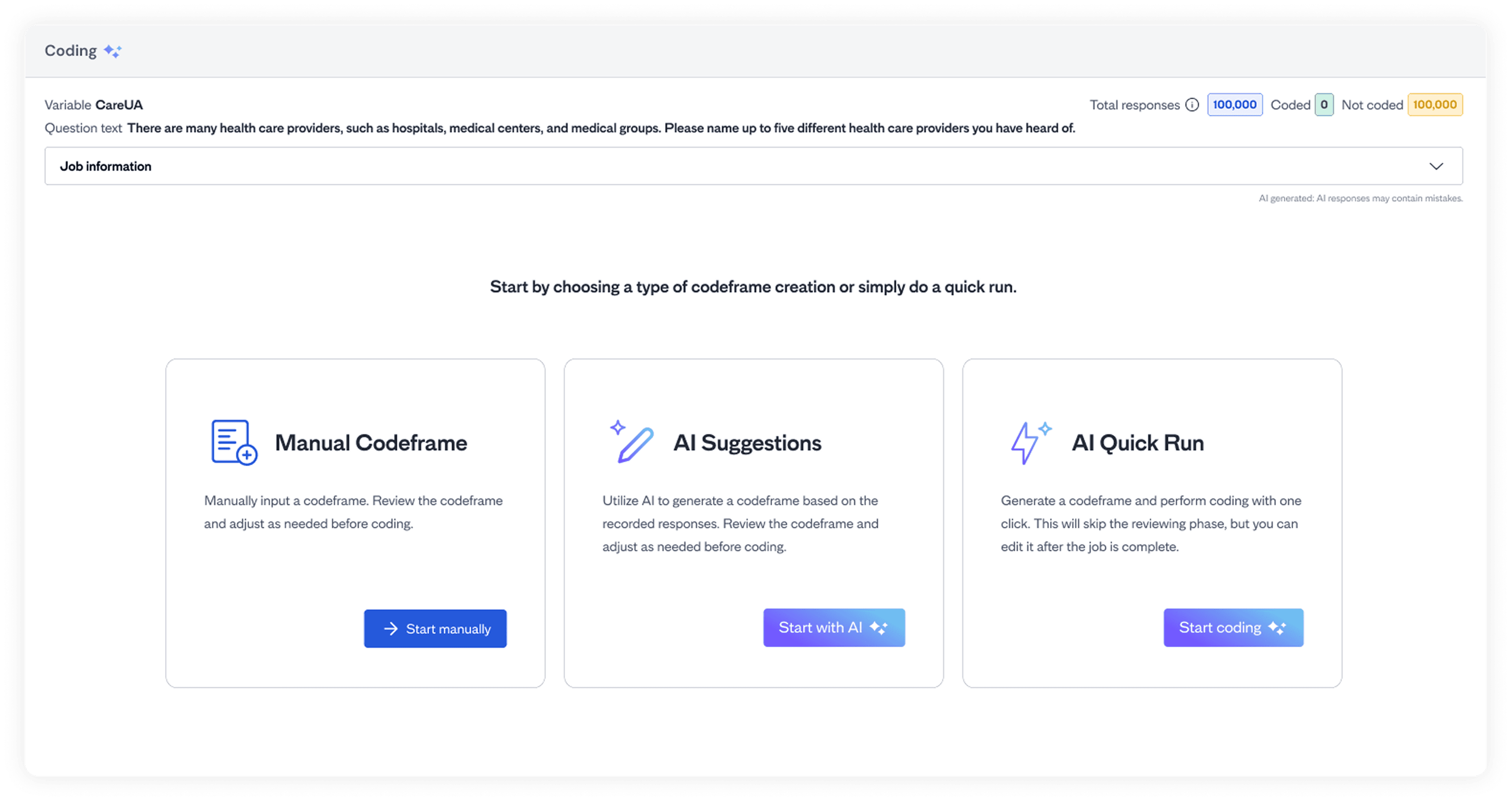
Usability testing with five users revealed that AI Codeframe creation paths were hard to find and users were unsure what to do after creating categories. I made three entry points explicit: Manual, AI Suggestions, and Quick Run, preserving different levels of automation and review.
I redesigned the experience around an iterative creation-to-results workflow, allowing researchers to refine their codeframe as needed. The changes were implemented but not retested.
Where It Landed
Oasis shipped through multiple releases, with ongoing feedback shaping its evolution. Adoption varied by workflow, and data quality remained an important consideration for AI-assisted experiences.
My role evolved alongside the platform—from designing individual interfaces to shaping workflows, system-level decisions, and implementation quality.